

Zimbabwe has emerged as one of Africa’s leading lithium producers, accounting for approximately 7 -10% of global lithium supply. Recognising the opportunity to unlock greater economic value from its mineral resources, the Government of Zimbabwe introduced restrictions in February 2026 on the export of lithium concentrates, raw chrome ore, platinum group metals, base and critical metals and other minerals as part of a broader strategy to promote domestic beneficiation and downstream processing.
In July 2026, the Minister of Mines reaffirmed that the January 2027 deadline for ending lithium concentrate exports remains unchanged despite requests from mining companies for an extension.
This policy represents a structural shift in how value will be created within Zimbabwe’s mining sector. It signals a transition from an extractive mining economy towards one that increasingly rewards local processing and industrialisation. For mining companies, this changes not only operational requirements but also the economics of investment, capital allocation and long-term competitiveness.
The policy shift comes at a time when global demand for lithium continues to be driven by the rapid adoption of electric vehicles (EVs), battery energy storage systems and the global transition towards clean energy. Although lithium prices have experienced volatility amid temporary oversupply, long-term demand remains supported by expanding battery manufacturing and the growing need for critical minerals. Together, these developments present mining companies with an opportunity to move beyond commodity production and participate in higher-value segments of the mining value chain.
Successfully navigating this transition requires more than investment in processing infrastructure. Companies must reassess their operating strategies, investment priorities and financing approaches to ensure that beneficiation creates sustainable shareholder value. Key considerations include:
a. Determining the optimal business model
b. Assessing financial viability
c. Establishing the optimal funding structure
Determining the Optimal Business Model
Beneficiation presents mining companies with important strategic choices. Organisations must identify the level of value addition that aligns with their resource base, production scale, market opportunities and operational capabilities. The objective will be to maximise value creation while maintaining operational efficiency and avoiding cost structures that could erode profitability.
Determining the Optimal Funding Structure
The transition towards value-added production will require many mining companies to reconsider how projects are financed. Depending on financial capacity and investment requirements, organisations may pursue debt, equity or a blended funding approach. Regardless of the financing route, investors and lenders increasingly expect projects to be supported by credible feasibility studies, strong financial models and clearly articulated implementation strategies that demonstrate commercial viability.
Financial Viability Assessment
Given the significant capital investment need, financial viability assessments are essential. Through financial modelling, sensitivity analysis and scenario testing, companies can evaluate alternative operating models, assess project resilience under changing market conditions and identify the approach that delivers the strongest commercial outcomes. This enables informed investment decisions and provides greater confidence to both management and potential financiers.
Crowe Speciality: The Expertise to Position You Ahead Crowe Zimbabwe
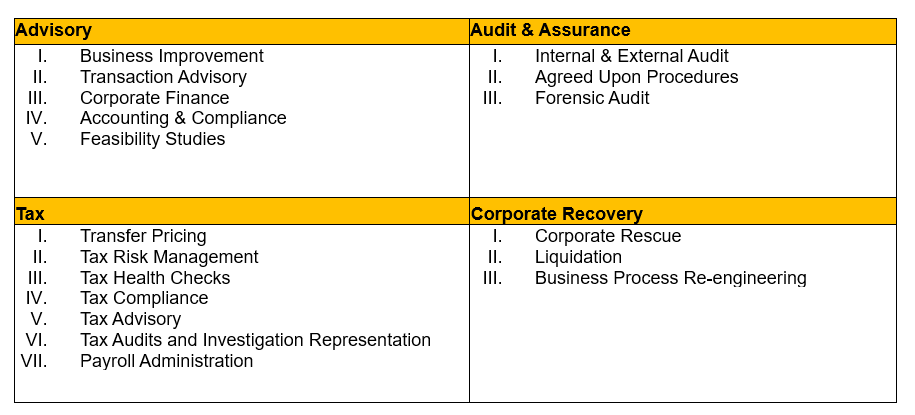
The firm has significant experience in undertaking Full Feasibility Studies (FFS), transaction advisory, financial modelling, investment structuring, project finance, and infrastructure development assignments across both the public and private sectors. Our experience spans the assessment, structuring, financing, and implementation of complex infrastructure, industrial, mining, commercial, and public service delivery projects.
Relevant services
Author
Shamiso Chandiwana
Business Analyst Intern